
Key Points:
- AAC devices support communication for nonverbal or minimally verbal individuals with autism, promoting connection and reducing frustration.
- The best autism communication devices are tailored to the individual’s needs, abilities, and environment.
- There are both high-tech and low-tech AAC options available, each with unique benefits depending on the user’s goals and preferences.
Finding the right way to help a child communicate when words don’t come easily can be an emotional and practical challenge. Many children with autism struggle with verbal communication, and parents often search for tools to help bridge that gap. That’s where autism communication devices, or AAC (Augmentative and Alternative Communication) devices, come in—giving children a voice when spoken words are difficult to express.
Are AAC Devices Effective for Autism?
Yes, absolutely. AAC devices are highly effective in supporting individuals with autism who have limited or no speech. These tools empower users to express their wants, needs, thoughts, and feelings in ways that are clear and understood by others.
Autism communication devices don’t replace speech—they support it. In fact, research shows that AAC use can enhance language development over time. For many families, introducing an AAC system marks a turning point in their child’s ability to connect with the world around them.
What is AAC and How Does It Work?
AAC stands for Augmentative and Alternative Communication. It refers to any method of communication other than verbal speech used to express oneself. This includes a wide range of tools, from simple picture boards to sophisticated speech-generating devices (SGDs).
AAC devices are especially helpful for autistic individuals who:
- Are nonverbal or minimally verbal
- Have delayed speech development
- Experience difficulty with expressive language
- Become frustrated when they can’t make their needs known
Depending on the child’s abilities and preferences, the right autism communication device can support communication in everyday situations—from asking for a snack to engaging in conversation with peers.
Benefits of AAC for Children with Autism
Using an AAC device can be life-changing. It’s not just about talking—it’s about connection, independence, and emotional well-being.
Here are some meaningful benefits:
- Reduces frustration and behavioral challenges by offering a way to express needs.
- Encourages social interaction with family, peers, and teachers.
- Supports academic engagement by giving students a way to participate in class.
- Builds confidence by empowering children to communicate more independently.
- Promotes language development rather than hindering speech, contrary to common myths.
With the right autism communication device, children often become more engaged, curious, and expressive in their daily lives.
Types of AAC Devices for Autism
There’s no one-size-fits-all solution when it comes to AAC. The best communication method depends on the child’s motor skills, cognitive level, preferences, and the settings where communication happens (home, school, therapy, etc.).
Low-Tech AAC Options
These require no electronics and are often a great starting point for early communicators. They’re also portable, affordable, and easy to customize.
Common low-tech options include:
- Picture Exchange Communication System (PECS): Children hand over pictures to express needs. For example, giving a picture of a cookie to ask for one.
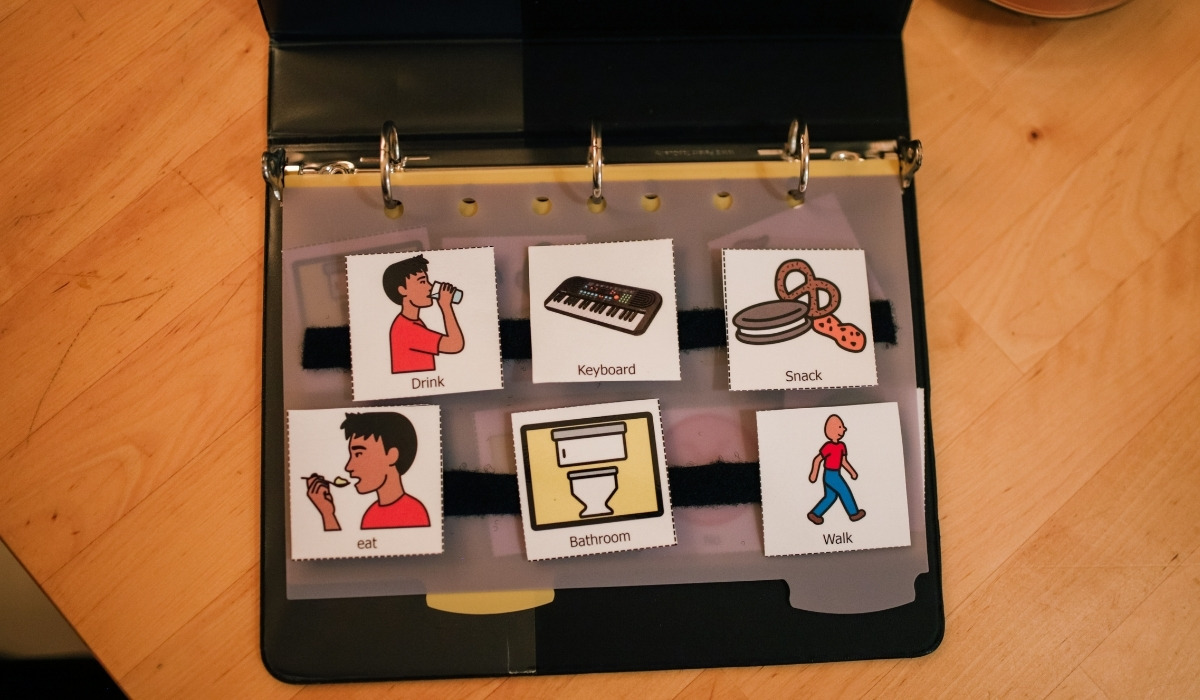
- Communication boards or books: These are laminated boards or binders with symbols, pictures, or words organized in categories.
- Sign language: A visual, gestural way to communicate that can be taught alongside other systems.
These tools are great for children who are just beginning to communicate or who may benefit from visual learning styles.
Mid-Tech AAC Devices
Mid-tech devices often include recorded messages and simple buttons. They’re useful for learners who can’t yet navigate complex screens but benefit from auditory feedback.
Examples include:
- Single-message voice output devices: Press a button to play a pre-recorded message like “I need help.”
- Sequential message devices: Allows multiple recorded messages in a sequence, like storytelling or making choices.
These tools provide auditory reinforcement while keeping interaction straightforward.
High-Tech AAC Devices
These are typically tablet-based systems or dedicated speech-generating devices. They offer advanced customization and can grow with the user’s abilities.
Some popular high-tech AAC options include:
- Proloquo2Go: A widely used app on iPads offering symbol-based communication and customizable vocabulary.
- TouchChat HD: Another iPad app that includes a wide vocabulary and various access methods.
- LAMP Words for Life: A robust system grounded in motor planning and consistency, used by many speech therapists.
- Tobii Dynavox: Dedicated AAC devices with eye-tracking options for users with limited mobility.
These devices are ideal for users who need flexibility, portability, and features like voice output and word prediction.
Choosing the Right AAC Device for Autistic Individuals
With so many autism communication devices available, choosing the right one can feel overwhelming. The good news is that you’re not alone in this decision—speech-language pathologists (SLPs) are key partners in guiding families through AAC selection and training.
When considering a device, think about the following factors:
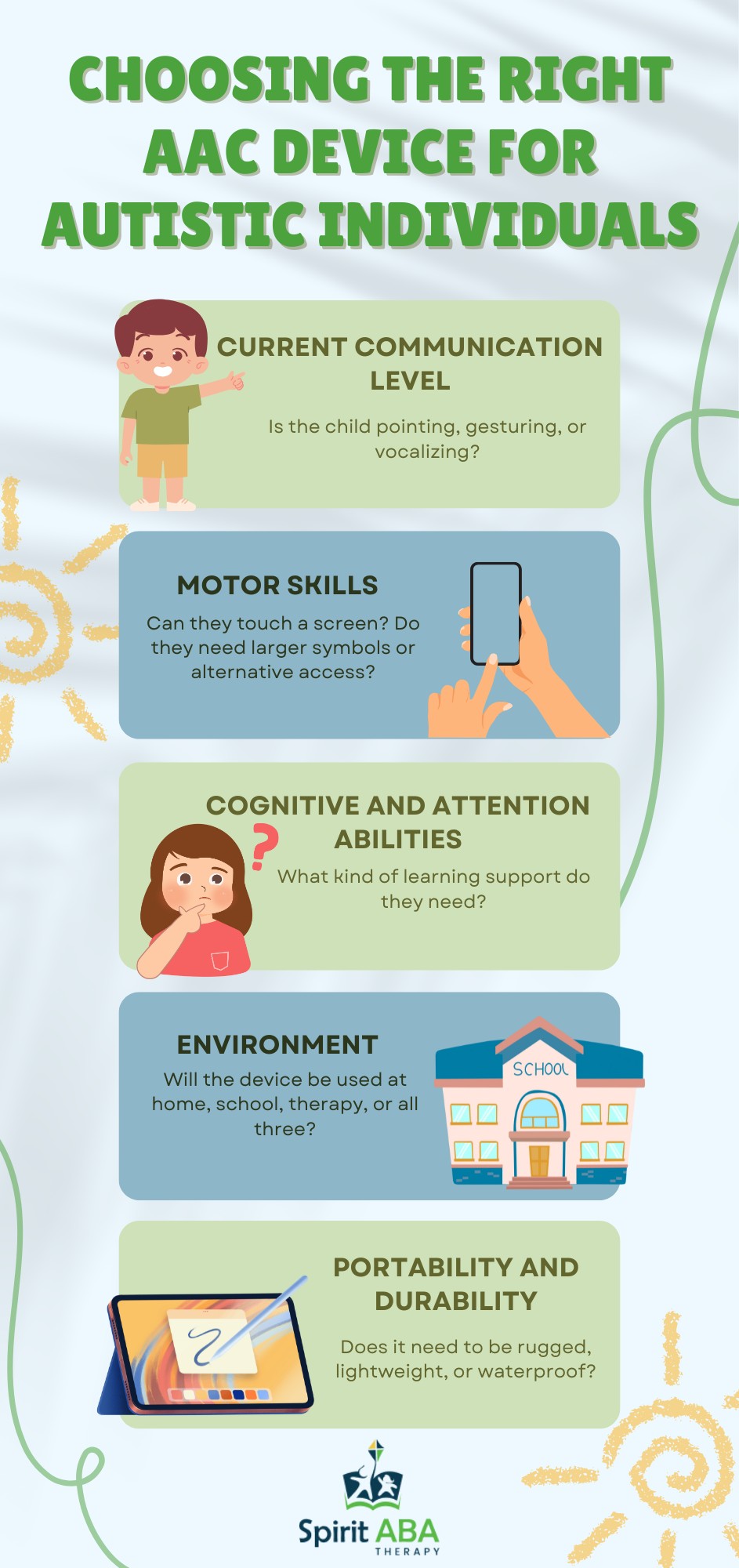
Trialing devices before committing to one is strongly encouraged. Many professionals can help families access loaner devices for testing.
Common Myths About AAC
Let’s clear up a few misconceptions that sometimes make parents hesitant to try AAC:
- Myth 1: “AAC will stop my child from talking.”
Reality: Research shows AAC can support speech development. It gives children a way to communicate while their speech develops. - Myth 2: “My child is too young or not ready.”
Reality: AAC can be introduced at any age. Many toddlers benefit from visual supports and early exposure. - Myth 3: “It’s only for nonverbal kids.”
Reality: AAC helps kids who are verbal but inconsistent, hard to understand, or struggling to use language effectively.
Understanding what AAC can and can’t do helps families make informed, confident decisions about introducing communication tools.
Getting Started With AAC
If you think your child might benefit from an autism communication device, here’s what to do:
- Talk to a speech-language pathologist (SLP): They’ll assess your child’s needs and recommend suitable options.
- Ask about funding or insurance coverage: Some devices can be covered by Medicaid, private insurance, or school services.
- Trial a few options: Many schools and clinics offer device trials to find the best fit.
- Commit to consistency: Practice using the device in everyday situations—mealtimes, play, outings—to build confidence.
- Be patient: Learning AAC takes time, just like learning to talk. Every small step is progress.
Supporting Communication Beyond the Device
While autism communication devices play a vital role, real connection also depends on how those around the child respond. Celebrate every communication attempt, model device use in natural settings, and include AAC in daily routines.
Encouragement from parents, teachers, and therapists makes a big difference in helping kids embrace their voice—whether it’s spoken, signed, or tapped on a screen. That same support is essential when introducing tools that foster independence and communication. To learn more, check out our article, Picture Exchange Communication System for Autism: A Guide. And for students navigating school with sensory or attention challenges, don’t miss our article, Study Tips to Help Autism Spectrum Students Stay Focused.
Connect With Spirit ABA for Compassionate Communication Support
Communication is at the heart of everything we do at Spirit ABA. If your child is using—or thinking about using—an AAC device, our compassionate team can help reinforce those skills in meaningful ways through ABA therapy in Iowa, Colorado, and Nebraska.
We work alongside families to build communication, reduce frustration, and improve daily living through personalized behavioral support. Whether your child uses pictures, gestures, or a high-tech device, we’ll help them connect, grow, and thrive.
Contact us today to learn how our therapy services can support your child’s journey with communication and beyond.

