
Key Points:
- Autistic individuals may struggle with social reciprocity, dialogue skills, and non-verbal communication.
- Visual supports, short-turn games, and role-playing improve turn-taking and conversation skills.
- Early intervention and tailored strategies enhance reciprocal communication and social independence.
Why Kids With ASD Often Struggle with Aspects of Social Communication
Research shows that autistic individuals often experience challenges with communication and social reciprocity, pragmatic language, and dialogue skills, core features of Autism Spectrum Disorder (ASD). These communication difficulties include trouble interpreting non-verbal cues, maintaining conversations, understanding humor, taking turns, and adapting communication to different social situations.
Targeted support is often needed to enhance social communication, helping autistic individuals engage meaningfully in everyday interactions. Understanding the areas where autistic individuals may struggle is essential for effective support. Key aspects include:
Social Reciprocity
Social reciprocity involves the back-and-forth flow of interaction, including sharing emotions, responding to praise, and initiating interactions. Delays or absence in these skills can make social engagement challenging.
Pragmatic Language (Social Use of Language)
Autistic individuals may struggle with the “hidden rules” of communication, such as using language to greet others, express needs, or share interests. Challenges in pragmatic language affect how individuals interact in social contexts.
Dialogue Skills
Difficulties in initiating, sustaining, and closing conversations, as well as maintaining topics, are common. Dialogue skills are essential for reciprocal communication and social interaction.
Non-Verbal Communication
Understanding facial expressions, body language, and maintaining eye contact are frequent challenges in autism. Non-verbal communication is an important part of meaningful dialogue and social reciprocity.
Strategies for Improving Communication
Effective strategies focus on structured, evidence-based approaches to strengthen conversation skills in autism:
Explicit Teaching
Directly teaching conversation rules, such as turn-taking and topic maintenance, helps autistic individuals learn the structure of reciprocal communication.
Visual Supports
Social stories, video modeling, and picture cards make abstract social concepts more concrete, helping with dialogue skills and turn-taking.
ABA Therapy
Applied Behavior Analysis (ABA) therapy develops social and communication skills, including initiating conversation, turn-taking, and maintaining topics. Techniques include role-playing, modeling, prompting, and positive reinforcement.
Early Intervention
Addressing social-emotional reciprocity early can reduce the severity of communication delays and promote long-term social engagement.
Strategies to Improve Turn-Taking and Conversation
Practical activities can help autistic individuals build reciprocal communication skills:
- Physical Turn-Taking Games: Rolling a ball, building blocks, or passing toys establishes a “my turn/your turn” rhythm.
- Follow Their Lead: Engage in topics or play activities the child finds interesting to increase motivation for conversation.
- Visual Aids & Social Stories: Picture cards, visual schedules, or social stories illustrate the structure of conversations.
- Role-Playing Scenarios: Practice greetings, asking for help, or other common conversations in a safe setting.
- Wait and Pause: Allow extra time for processing after asking questions or making comments.
Adapting Communication Style
Tailoring language and prompts improves understanding and engagement:
- Keep Language Simple & Clear: Use short sentences and emphasize key words.
- Model and Expand: Gradually build on existing language use without pressure.
- Use Visuals for Non-Verbal Communication: Tools like picture exchange systems or AAC methods support communication.
- Use Specific Prompts: Offer choices instead of open-ended questions to encourage responses.
Key Behavioral Techniques
Building conversation skills relies on consistent behavioral strategies:
- Positive Reinforcement: Praise or small rewards reinforce successful reciprocal communication.
- Imitation: Mirroring the child’s actions demonstrates impact and encourages interaction.
- Consistent Engagement: Gentle, repeated attempts to engage strengthen trust and familiarity.
Common Pitfalls to Avoid
- Anticipating All Needs: Allow the individual to express needs to encourage communication.
- Taking Silence Personally: Quiet moments may reflect processing time rather than rejection.

ABA Therapy and Reciprocal Conversation: Strategies for Effective Communication
ABA therapy supports essential conversation skills in autism, including initiating, turn-taking, and maintaining topics. Techniques include:
- Discrete Trial Training (DTT): Breaking social interactions into small, repeatable steps.
- Naturalistic Teaching: Practicing skills within natural activities or play.
- Modeling & Role-Playing: Demonstrating and practicing conversational exchanges.
- Visual Supports: Using turn-taking cards or timers to indicate whose turn it is.
- Positive Reinforcement: Rewards motivate continued engagement in conversation.
Common therapy targets include greeting others, answering and asking questions, and responding to statements to promote topic maintenance.
Conversation Scenario: The “Train Track” Method
This method helps a child stay on a single topic—like building blocks—by visualizing each turn as a train car.
Set up: Use a train visual where each car represents one turn or comment about the topic.
Example:
- Adult: “Let’s build a tall tower with these blocks. What color is this?” (1st Car – On Topic)
- Child: “Blue block.” (2nd Car – On Topic)
- Adult: “Yes! A blue block. Where should I put it?” (3rd Car – On Topic)
- Child: “On the top!” (4th Car – On Topic)
- Child: “I like trains.” (Off Topic – Train car falls off)
- Adult: “That was fun, but we’re talking about blocks right now. Let’s get our train back on track. What else can we do with the blocks?” (3rd Car – Redirection)
- Child: “Make a garage!” (4th Car – Back on Topic)
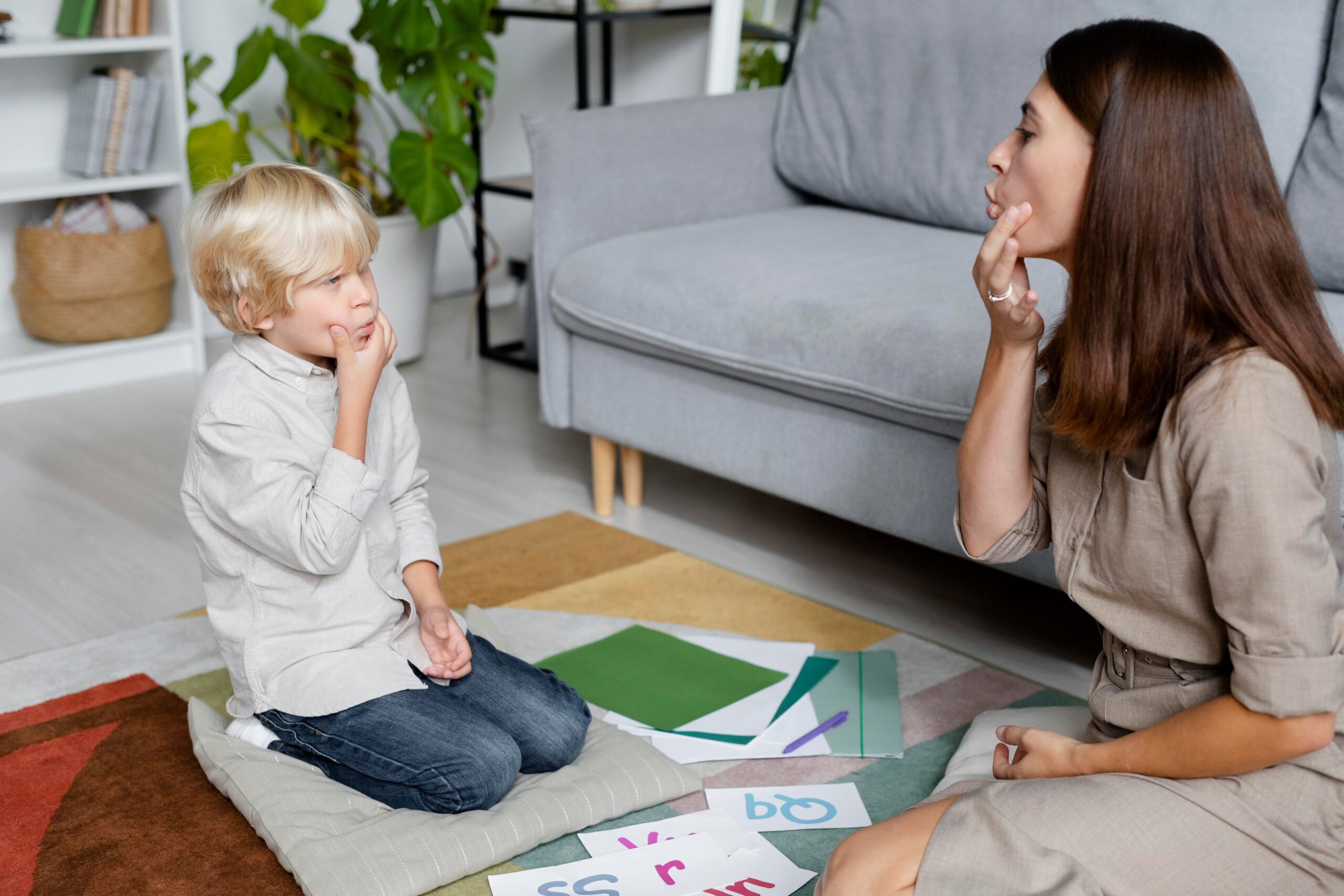
Strategies for Turn-Taking and Topic Maintenance
- Visual Cues: Use red/green cards to show “your turn” (green) and “listening/wait” (red).
- Topic Tracker: Keep a “conversation train” sheet to track comments related to the topic and count how many turns are completed.
- Wait Time: Practice pausing 5 seconds before responding to allow processing and reduce interruptions.
- Shared Activity: Use activities like Legos or building towers where each person takes turns adding pieces, mimicking back-and-forth conversation.
- Short Turns: Start with very brief turns to help the child understand the structure before gradually increasing complexity.
Benefits of Structured Communication Support
- Provides Structure: Explicit rules help autistic individuals navigate unpredictable social interactions.
- Reduces Overload: Visual supports simplify complex verbal cues.
- Encourages Engagement: Building on preferred topics maintains interest without forcing rapid topic changes.
Supporting Your Child At Home
Support your child’s growth where it matters most, at home and in the community. At Spirit ABA Therapy, our compassionate, evidence‑based ABA programs meet your child where they live and play, helping them build real‑world skills and independence. Schedule your free consultation today in Colorado, Iowa, and Texas, and see the difference personalized, in‑home therapy can make.
Learn practical ways to support, teach, and communicate with your child.
 FAQs
FAQs
- What are common communication challenges for autistic children?
Autistic children often struggle with social reciprocity, pragmatic language, dialogue skills, and non-verbal communication. This can include difficulty interpreting facial expressions, maintaining conversations, understanding humor, taking turns, and adapting communication to different social situations.
- How can turn-taking and topic maintenance be taught?
Turn-taking and topic maintenance can be supported with structured short-turn games, visual aids, role-playing, and consistent practice. Tools like “my turn/your turn” cards, topic trackers, and shared activities help children practice back-and-forth conversation and stay on topic.
- What strategies help improve social reciprocity in autism?
Effective strategies include explicit teaching of conversation rules, visual supports like social stories or video modeling, and tailored ABA therapy techniques such as modeling, prompting, and positive reinforcement. Early intervention also helps reduce communication delays.
- How should adults adapt their communication for autistic children?
Keep language simple and clear, emphasize key words, and model longer phrases gradually. Use visual tools for non-verbal communication, provide specific prompts instead of open-ended questions, and allow extra wait time for responses to support processing.
- What are common pitfalls to avoid when teaching conversation skills?
Avoid anticipating all of the child’s needs or taking silence personally. Quiet moments often reflect processing time rather than rejection, and allowing the child to express themselves encourages communication.
- How does ABA therapy support reciprocal communication?
ABA therapy builds conversation skills through discrete trial training, naturalistic teaching, role-playing, visual supports, and positive reinforcement. Common therapy targets include initiating greetings, answering and asking questions, and maintaining a topic during conversations.

