

Quick Summary:
- How to tell the difference between autism overwhelm and anxiety
- Common signs of anxiety in an autistic child that are easy to miss
- How Spirit ABA supports families through anxious moments with practical strategies

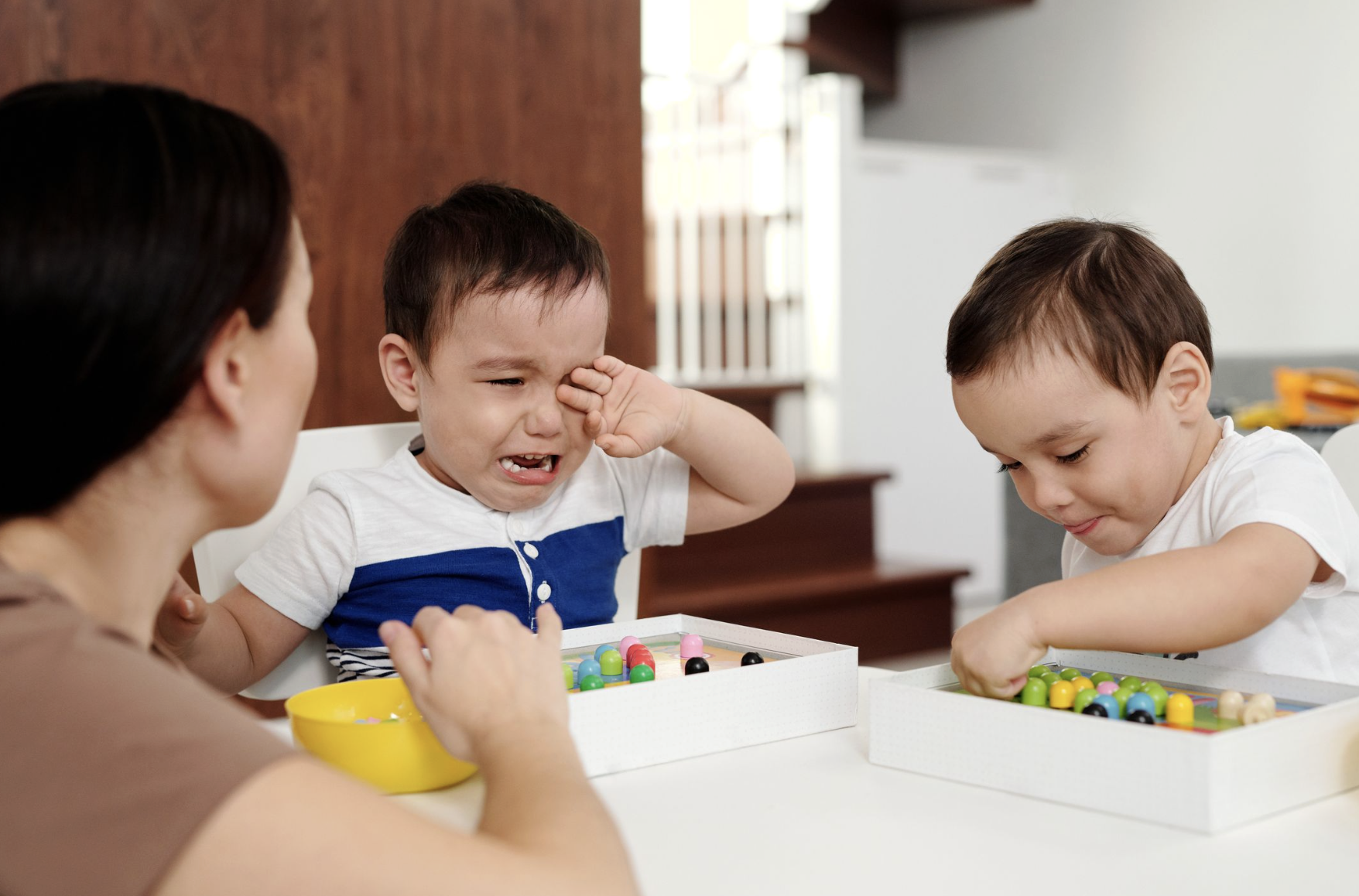
Does your child seem fine one minute and completely shut down the next, with no clear reason why? Do you find yourself wondering whether it is a meltdown, overwhelm, or something more like anxiety? Autism and anxiety in children often overlap in ways that make it hard to tell what is really going on, and that uncertainty is exhausting for any parent.
Autism Overwhelm vs Anxiety: What Is the Difference?
Many parents assume every meltdown or shutdown is anxiety. Sometimes it is. Sometimes it is sensory overwhelm instead, and the two can look nearly identical from the outside.
Autism overwhelm vs anxiety comes down to the trigger and what is happening internally:
- Sensory overwhelm usually comes from too much input at once, like noise, lights, or crowds. Once the input stops, a child often recovers fairly quickly.
- Anxiety tends to build over time and can happen even in a calm, quiet environment. It often centers on worry about what might happen next, not what is happening right now.
Both can lead to similar behaviors, including avoidance, meltdowns, or withdrawal. Telling them apart matters because the support looks different for each one.
At Spirit ABA, our team spends time observing patterns before assuming a cause. In our experience, a child who melts down every time they enter a loud classroom is showing something different than a child who melts down every Sunday night before school starts again.
Signs of Anxiety in an Autistic Child
Signs of anxiety in an autistic child do not always look like typical worry. Many children cannot easily explain what they are feeling, so anxiety often shows up through behavior instead of words.
Watch for:
- Increased repetitive behaviors or stimming, especially before transitions
- Avoidance of certain places, people, or activities without an obvious reason
- Physical complaints like stomachaches or headaches with no medical cause
- Sudden changes in sleep or appetite
- Increased need for routine or distress when routines shift unexpectedly
- Difficulty separating from a parent or caregiver, even in familiar settings
These signs can be subtle at first. A child might simply seem more irritable or withdrawn for a few days before a bigger reaction shows up. Paying attention to smaller shifts early can make a real difference in how anxiety is addressed.

Why Anxious Autistic Child Support Requires a Different Approach
Anxious autistic children’s support cannot rely only on the strategies used for typically developing children. Traditional anxiety advice, like “just talk about your feelings,” often does not work well for a child who struggles with language around emotions or abstract concepts.
This is part of why ABA therapy for anxiety and autism looks different from general anxiety counseling. Instead of relying heavily on conversation, ABA-based support focuses on:
- Identifying specific triggers through direct observation and data
- Teaching concrete coping skills a child can practice repeatedly
- Building predictability into daily routines to reduce baseline anxiety
- Using visual supports and clear language instead of abstract discussion
At Spirit ABA, our team builds these strategies into a plan shaped around each child’s specific triggers and communication style.
Managing Anxiety Autism Strategies That Work at Home
Managing anxiety and autism strategies can start at home, even before formal therapy begins. Small, consistent changes often ease daily stress for the whole family.
Try these approaches:
- Give advance notice for transitions: A five-minute warning before switching activities reduces surprise-related anxiety.
- Use visual schedules: Seeing what comes next helps reduce uncertainty throughout the day.
- Name the feeling simply: Saying “this feels hard right now” gives a child language without requiring a long conversation.
- Keep a predictable routine: Consistency lowers overall anxiety, even on days nothing unusual happens.
- Avoid forcing eye contact or conversation during distress: Some children need space, not direct engagement, in the moment.
These strategies work best when applied consistently, not just during obviously stressful moments. Anxiety often builds quietly before it becomes visible.

Calming Strategies for Autistic Children: What Support Can Look Like
Calming strategies for an autistic child depend heavily on what actually helps that specific child. What calms one child might overwhelm another, so this often takes some trial and observation.
Common calming strategies include:
- Deep pressure input, like a weighted blanket or firm hug, for children who find this soothing
- A quiet, low-stimulation space to retreat to when things feel like too much
- Movement breaks, such as walking or jumping, for children who process anxiety physically
- Familiar, repetitive activities that offer comfort during stressful transitions
In our experience, one family came to us with a child who had frequent meltdowns before school drop-off every morning. Through observation, our team identified that the unpredictability of the school hallway, not the classroom itself, was the main trigger.
A visual walkthrough routine and a consistent drop-off script reduced those meltdowns significantly within a few weeks. A different child needed a completely different approach, using movement breaks built into the morning routine instead of a visual schedule, because his anxiety showed up physically rather than through avoidance.
How Spirit ABA Supports Families Managing Anxiety
Every child’s anxiety looks a little different, which is why generic advice often falls short. Our team at Spirit ABA starts with careful observation before building any plan.
Support may include:
- In-home ABA therapy sessions that address anxiety in the actual settings where it shows up
- School-based ABA therapy coordination so strategies carry into the classroom
- Parent training so families feel confident supporting their child between sessions
- Telehealth ABA therapy for families needing flexible scheduling
- Autism evaluation and diagnosis services for families still seeking clarity on what their child is experiencing
We currently support families across Colorado, including Denver and Colorado Springs, along with Texas, Iowa, North Carolina, New Mexico, and Arizona.
Frequently Asked Questions
- How do I know if my child’s meltdown is anxiety or sensory overwhelm?
Sensory overwhelm usually resolves once the input stops, while anxiety often builds beforehand and lingers even in calm settings. Tracking what happens right before a reaction can help identify the pattern.
- Can ABA therapy help with anxiety, or is it only for behavior support?
ABA therapy can absolutely support anxiety management. Our team identifies specific triggers and builds coping strategies tailored to how your child communicates and processes stress.
- What are early signs of anxiety I might be missing in my child?
Increased stimming, physical complaints without a medical cause, and a stronger need for routine can all signal rising anxiety, even before a full meltdown happens.
- Should I always try to calm my child down during a meltdown?
Sometimes a child needs space rather than direct comforting. Our team can help you figure out which approach works for your specific child.
- Does insurance typically cover ABA support for anxiety in autism?
Coverage depends on your specific plan and provider. Our team can walk through your benefits with you during your first conversation with us.
Let’s Talk Through What Your Child Is Experiencing
Watching your child struggle with anxiety, especially when you cannot always tell what is driving it, takes a toll. You do not have to keep guessing alone.
Our team at Spirit ABA takes the time to understand your child’s specific triggers and build support that actually fits.
Reach out to us at 303-276-3995 or email info@spiritaba.com to talk through what your child may be experiencing. You can also visit our Let’s Talk page to get started. Your child’s anxiety deserves a real answer, not just another guess.

