
Key Points:
- Spirit ABA offers supportive ABA assessments for children.
- Evaluations are play-based and tailored to each child.
- Families receive clear results and next-step guidance.

Has your pediatrician recommended an ABA evaluation, and you are not sure what comes next?
You are not alone. Many parents walk into their child’s first assessment carrying a mix of hope, worry, and questions they have not been able to put into words.
At Spirit ABA, we help families across Colorado, Iowa, Texas, North Carolina, New Mexico, and Arizona move through the autism evaluation and diagnosis process with clarity.
Here is a clear breakdown of the first ABA assessment, what to expect from each step, and how to support your child along the way.
What is an ABA assessment?
An ABA assessment is a structured process used to understand your child’s strengths, challenges, and developmental needs. The goal is not to label your child. The goal is to get a clear picture of how they communicate, learn, and respond to the world.
A BCBA initial evaluation typically gathers information through:
- Parent interviews about your child’s history and daily life
- Standardized diagnostic tools
- Direct observation of your child during play and activities
- Structured assessments tailored to age and ability
This process gives our clinicians a complete view of your child’s behavior, communication style, and skill level.

Preparing your child for an ABA evaluation
Most children do not need formal preparation. The session is built around play and observation, not testing in a traditional sense.
A few simple steps make the day go more smoothly:
- Bring a comfort item like a favorite toy or stuffed animal
- Pack snacks and a water bottle
- Schedule the appointment after a meal and a nap when possible
- Wear comfortable clothes that your child can move freely in
- Avoid scheduling other big events on the same day
Preparing a child for an ABA evaluation often means preparing yourself too. Take a few minutes the night before to write down any questions or behaviors you want to mention.
The ABA intake assessment: what happens during the visit
The ABA intake assessment usually unfolds in clear, manageable stages. Knowing what each looks like reduces surprise on the day.
Step 1: Parent interview
The session begins with a conversation between the BCBA and you. Expect questions about:
- Pregnancy, birth, and early development
- Communication milestones
- Sleep, eating, and sensory patterns
- Daily routines and challenges
- Social interactions with family and peers
- Previous evaluations or therapies
This part may take 30 to 60 minutes. Be honest. Small details often matter more than they seem.

Step 2: Direct observation and play-based assessment
Next, the BCBA spends time with your child. The session looks more like play than testing. Your child may:
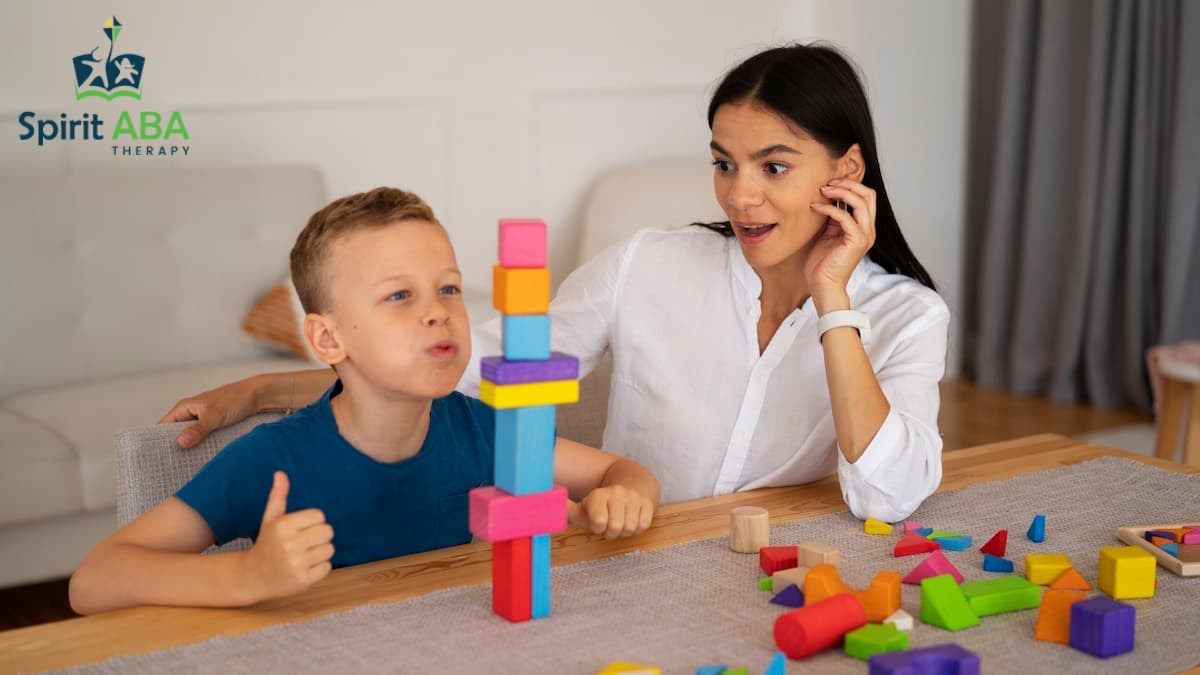
- Stack blocks, draw, or work with puzzles
- Sing songs or read books with the clinician
- Play with toys while the BCBA takes notes
- Respond to simple requests or questions
Some children warm up quickly. Others need time. Both are okay. The clinician adjusts the pace to your child.
Step 3: Standardized tools
Depending on your child’s age, the BCBA may use formal diagnostic tools. These compare your child’s responses to typical developmental patterns. Common assessments include developmental screeners, adaptive behavior scales, and play-based diagnostic measures.
Step 4: Closing conversation
At the end of the visit, the BCBA shares early observations and explains the next steps. You usually leave with a clearer sense of timing for the written report.
The full ABA evaluation process often takes place across one or two sessions, followed by a results meeting.

What happens after the ABA assessment
A few weeks after the visit, you receive a document that includes:
- A summary of your child’s strengths and challenges
- Diagnostic findings, when applicable
- Skill area scores
- Recommendations for therapy, school supports, and community resources
- Suggested goals for treatment
Your BCBA schedules a meeting to walk you through the report in plain language. You can ask questions, request clarification, and discuss what feels right for your family.
Examples of first assessments in action
Here is what autism assessment first visit experiences look like across Spirit ABA’s service areas:
A toddler in Denver
A two-year-old in Denver came in for an in-home assessment after his pediatrician noticed limited eye contact and few spoken words. The BCBA met him on his living room floor with bubbles and stacking cups. Within 90 minutes, she had enough information to begin shaping his treatment plan. His parents started in-home ABA therapy within three weeks.
A school-age child in Des Moines
A six-year-old in Des Moines completed her assessment across two visits. The first focused on parent interviews and play-based observation. The second included standardized tools and a closing conversation. Her family received the report and a recommendation for school-based ABA support within two weeks.
A teen in Phoenix
A 13-year-old in Phoenix preferred a quiet space and structured questions over open-ended play. The BCBA adjusted the assessment to match. His evaluation included interest-based activities and direct conversation. His report led to a tailored plan that built on his strengths.
A rural family using telehealth
A family in a rural North Carolina county scheduled their child’s first assessment through telehealth ABA therapy. The BCBA conducted the parent interview by video and observed the child playing at home. The remote format made the process less stressful and removed the need for a long drive to a clinic.
How to get started with Spirit ABA
It’s simple, our process starts when you reach out to us:
- Call 303-276-3995 or email info@spiritaba.com
- Schedule a free consultation with our team
- Begin intake, insurance verification, and your child’s assessment
Frequently asked questions
- How long does an ABA assessment take?
Most assessments take place over one or two sessions, plus a results meeting. Each session usually lasts one to three hours. - Will my child be tested in a stressful way?
No. The session is built around play and observation. The clinician adjusts the pace based on your child’s response.
- Do I need an autism diagnosis before scheduling an ABA assessment?
Not always. Spirit ABA offers full autism evaluations for families who do not yet have a diagnosis.
- How soon do we get results?
Most families receive a written report and a results meeting within two to four weeks of the final assessment session.
- Is the evaluation covered by insurance?
Coverage varies by provider and state. Our team verifies your benefits before services begin.
Ready to schedule your child’s first assessment?
Your child deserves clear answers and a path forward. With the right team, the assessment process feels supportive.
Call Spirit ABA at 303-276-3995 or email info@spiritaba.com to schedule your free consultation.
You can also reach us through our Let’s Talk page. Our team will guide you from your first question to your child’s first session.

